
Training
Advanced Analogue IC Design: Inside DkCCC's First Training Course
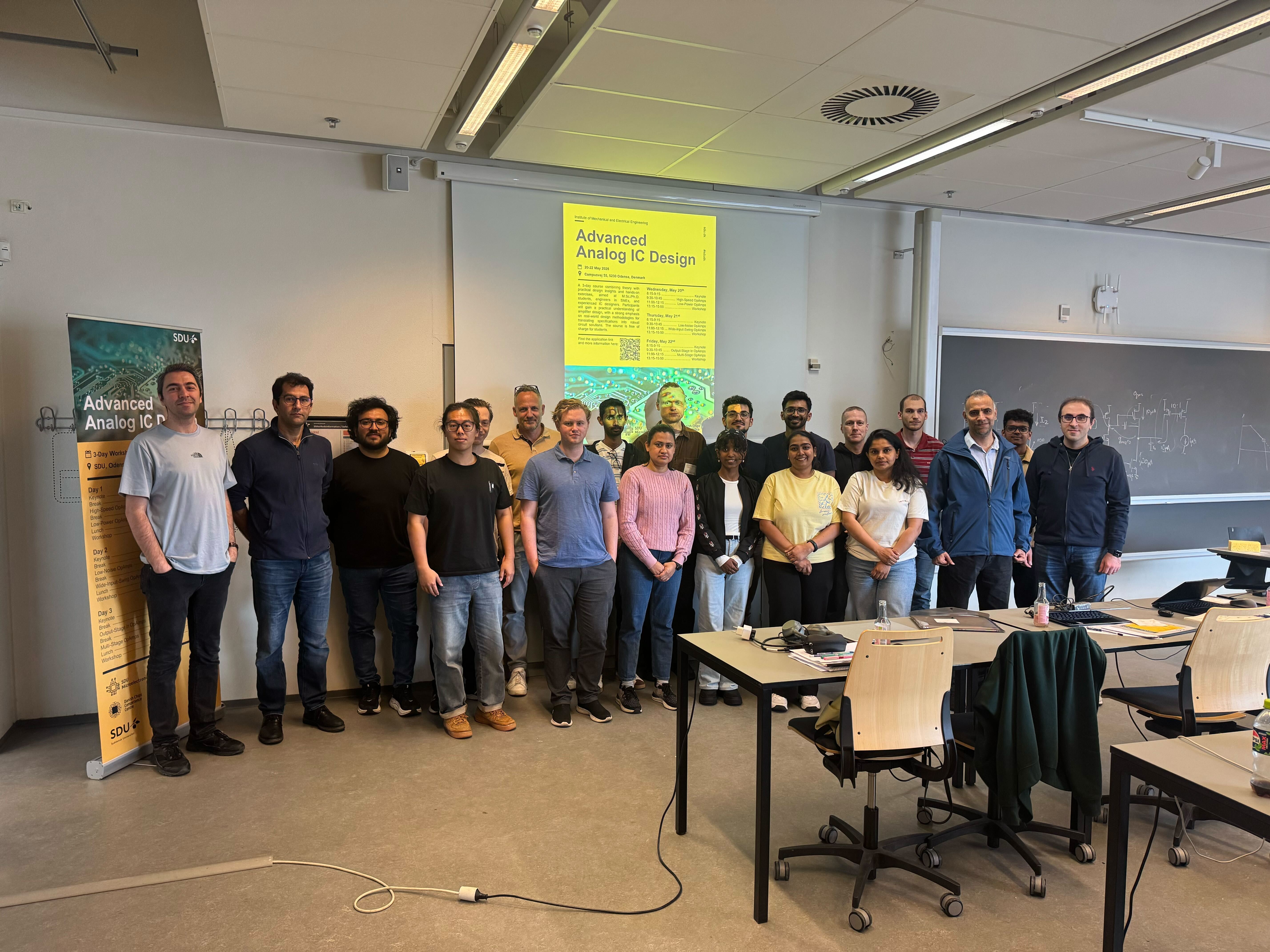
22 participants from across Europe gathered at SDU in Odense for three days of intensive training – from keynote lectures to hands-on workshops.
Analogue design in a digital age
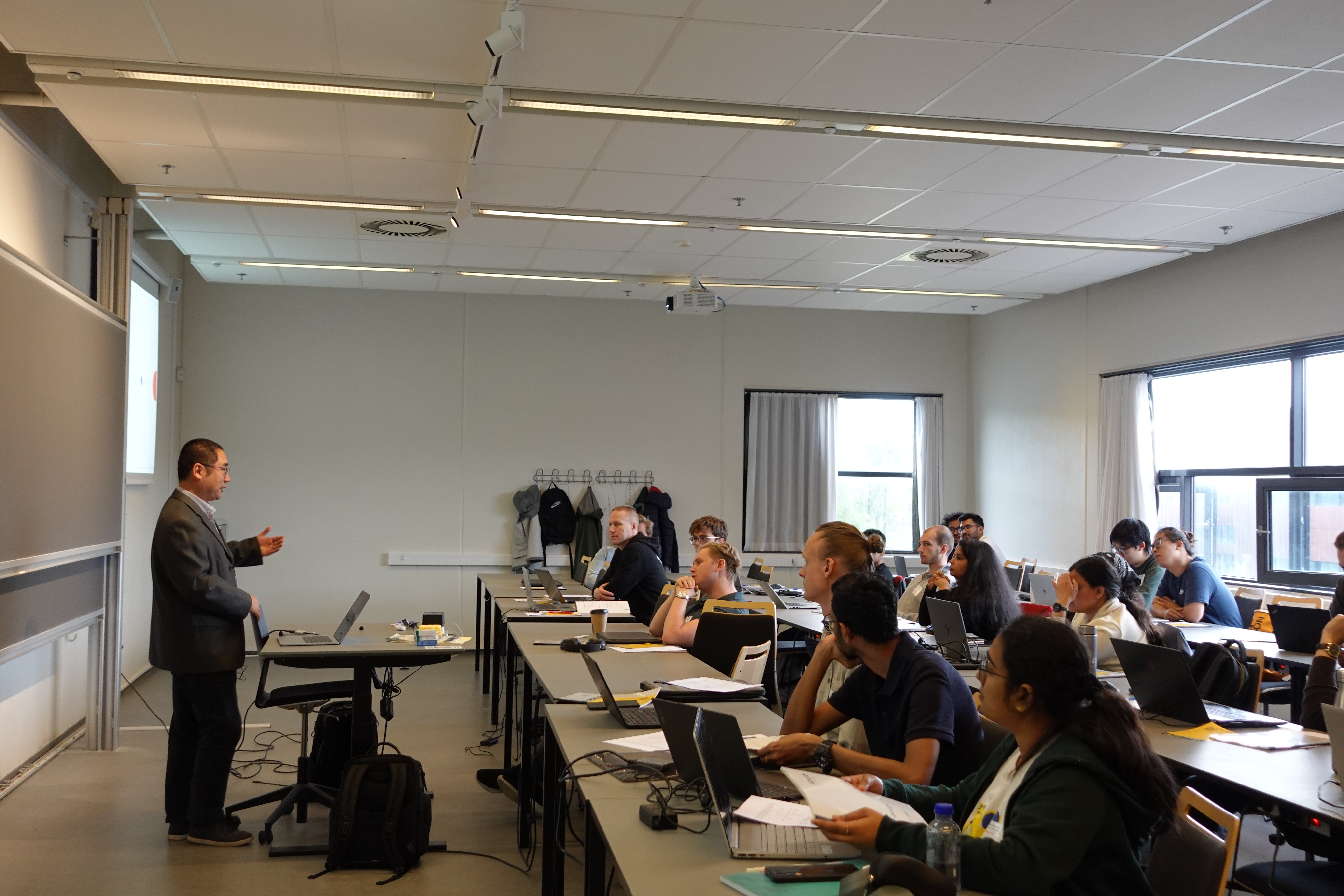
The course opened with an introduction by Farshad Moradi, Professor at SDU Microelectronics, followed by a keynote from Professor Quan Li, head of the Institute of Integrated Circuits and Systems at Hamburg University of Technology. With 25 years of experience in analogue design, Professor Li posed a question that set the tone for the days ahead: What is the role of analogue IC design in an era defined by AI, automation, and digital integration?
The answer, as participants hopefully learnt across three days of lectures and workshops, is that analogue design remains more relevant than ever – and demands practical knowledge that simply cannot be automated away.
A growing interest in chip training across Europe
The 22 participants included PhD students, postdoctoral researchers, and industry engineers from Denmark, Germany, France, and beyond – a clear sign that there is a demand for this type of practical, expert-led training across Europe.
For Johan and Dan, PhD students at Kiel University, the course was directly relevant to their research on low-power design and high-speed amplifiers respectively: “It's broadening our knowledge and giving us new perspectives on the same problems," they said. They applied despite being unsure whether students from Germany would be eligible – but they were.
Nida, a researcher working at the intersection of neuromorphic computing and machine learning, came to reconnect with the hardware side of her field. Having focused heavily on deep learning in recent years, she wanted to better understand circuit-level implementation – both for her own work and to support colleagues and interns from different technical backgrounds.
Not all participants come from chip design backgrounds. Anders, an engineer at Interacoustics in Denmark, designs PCBs and works extensively with ICs – but had never looked closely at what goes on inside them. For him, the course was an opportunity to understand the components he works with daily. "It gives me an understanding I haven't had before," he said. "The course is more focused on the design of the IC itself than on what surrounds it, which is more my area – but it still gives me a better understanding of what I’m working with."
Chip design made accessible
The course is free for students and carries a fee of 10.000 DKK for SMEs – a cost that can be fully offset through an Article 28 rebate under EU state aid rules, making participation effectively free for qualifying companies. Large companies pay 10.000 DKK (approximately 1.500 EUR).
This pricing structure is intentional. One of DkCCC's core goals is to lower barriers to entry for Danish companies looking to engage with chip technology – whether as designers, users, or partners in the broader supply chain. By helping companies get the right knowledge and skills in designing chips, we help grow our industry.
More training on the way
Following the overwhelming interest in the course, we aim to offer more training courses in the future. Upcoming courses may include topics such as Quantum-CMOS design and Spintronics, expected in late 2026 or early 2027.
To stay informed about upcoming courses and DkCCC's activities, follow us on LinkedIn or sign up for our newsletter.


