
Event
Chips in Denmark: Strategies for strengthening Denmark in the global chips ecosystem
110+ participants across industry, academia, policy, and investment gathered for Denmark’s first ever national chips summit.
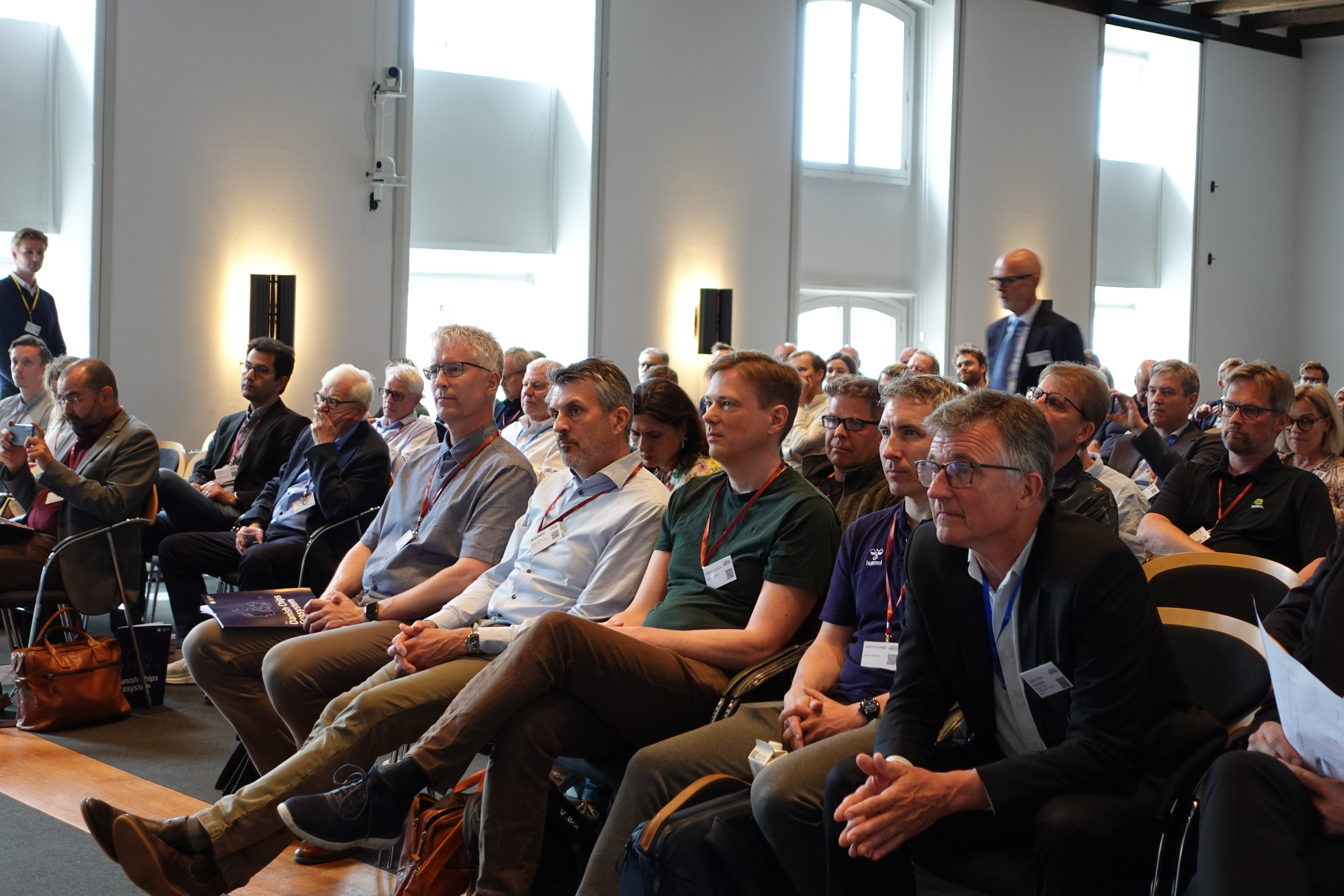
Quantum and infrastructure: Denmark's emerging edge
In the breakout sessions, one focus area was the intersection of chips and quantum where Denmark has already invested heavily.
Microsoft's presence at the summit was notable. The company, which has made Denmark a central location for its quantum computing work, described its ambition to compress decades of technological progress into a much shorter timeframe, with quantum as the key accelerator. Its second-generation Majorana chip, currently moving from research into engineering, represents a step-change in the resilience and lifespan of quantum hardware. Microsoft cited Denmark's research talent and its track record of translating basic science into commercial application as key reasons for its continued investment – and expressed a clear interest in maintaining transatlantic collaboration in the quantum space.
Sparrow Quantum, a Copenhagen-based company building on two decades of photonic research, described its work developing a European quantum computer based on photonic chip technology. The company is a partner in the P4Q pilot line under the EU Chips Act – one of 50 organisations involved – and is investing in its own wafer processing infrastructure. Raising significant capital in a sector where volumes are low and complexity is extremely high remains a challenge, but the pathway is becoming clearer.
The summit also surfaced a concrete proposal: the establishment of a Danish quantum chip packaging pilot line. Multiple speakers pointed to packaging as an underdeveloped capability in the Danish ecosystem, and to Denmark's existing research base at the University of Copenhagen as a credible starting point. A realistic timeline of 12 to 18 months was discussed.
DTU Nanolab and the Quantum Foundry both described their roles as open-access infrastructure providers – giving startups and SMEs access to advanced fabrication capabilities they could not afford to build independently. DTU is currently part of two EU pilot lines and is developing new educational programmes to address the talent pipeline. The Quantum Foundry highlighted its ambition to serve external organisations, not only the University of Copenhagen, and is working towards an external process design kit (PDK).
TOPSIL, one of only five global producers of float-zone silicon – a critical material for advanced semiconductor manufacturing – offered a grounding reminder that Denmark already participates in the global chip supply chain at a fundamental level. The company's argument: Denmark should be more deliberate about building on the links it already owns, and about buying European where possible.
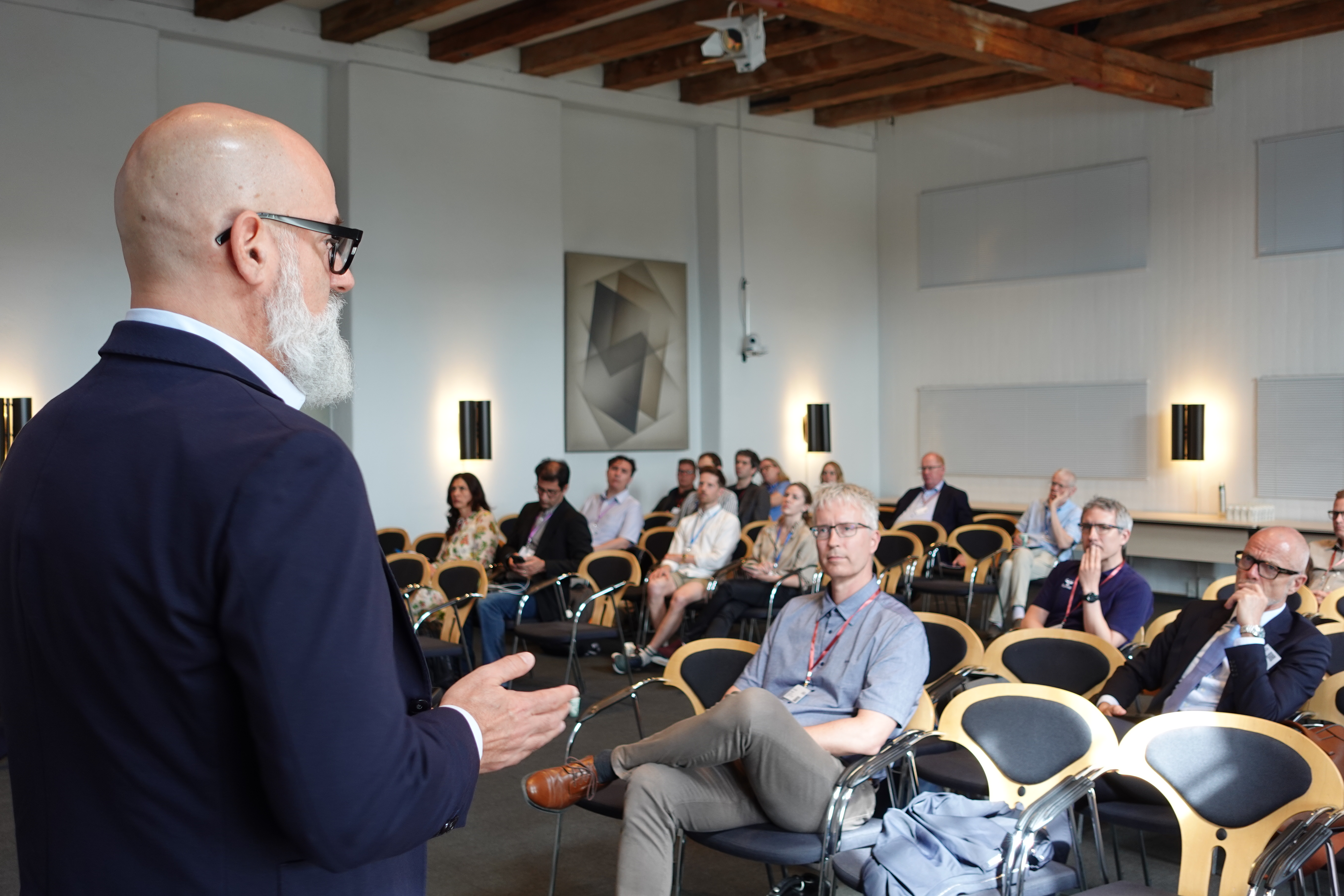
Investment, resilience, and defence
The afternoon sessions turned to the conditions needed to sustain and grow Denmark's chips ecosystem over time – investment, policy stability, and strategic demand.
On investment, the picture is mixed. Denmark's chip ecosystem is largely early-stage and fab-less, and European fundraising timelines remain significantly longer than in North America or Asia. The competence centre network – including DkCCC – plays a role here, providing technical support, training, and connections to private capital. But the structural gap between European and non-European investment timelines reflects a deeper challenge: European investors remain more domestically oriented and less specialised in deep tech than their US or Chinese counterparts.
The defence angle was addressed directly in a dedicated session. Semiconductors are foundational to modern defence capability – from communications and navigation to autonomous systems and sensors. Denmark's own defence industry, represented at the summit by Terma, is acutely aware of supply chain exposure and increasingly focused on sourcing critical inputs from trusted, ideally European, suppliers. The parallel with ammunition production was drawn explicitly: when Europe found itself exposed in that area, the Nordic countries moved to build shared production capacity. The point was that chips may require a similar response.
The business case for European sourcing is not purely defensive. Multiple speakers noted that European companies are willing to pay a modest premium to source from European suppliers – if the product is available and the regulatory environment allows for efficient procurement. The latter remains a significant obstacle. EU regulations, designed for other purposes, frequently slow down procurement and investment decisions in ways that undermine competitiveness. Chips Act 2.0's demand-side measures are a step in the right direction, but the speed of implementation will matter.
What comes next
The summit closed with a clear sense that this was a beginning, not a conclusion. The Ecosystem Mapping Report report provides the foundation. The conversations started on 8 June — across talent, infrastructure, investment, defence, and international positioning — are the ones that will need to continue and deepen if Denmark is to translate its existing strengths into a durable position in the global chips ecosystem.
DkCCC is planning to make Chips in Denmark an annual event. We are actively working on a second edition of the report, which will feature a comprehensive, living company directory.
The Danish Chips Ecosystem Mapping Report is available to download here.


